Key Takeaways
- Mainstream brands typically cost $400 to $600 per year to maintain.
- Luxury brands like BMW and Land Rover often cost double that amount.
- CarEdge estimates BMW maintenance near $17,800 over ten years.
- Electric vehicles cut maintenance costs roughly in half, per Consumer Reports.
- Model choice can save you more than $10,000 across a decade of driving.
My college roommate Jake bought a used BMW 5 Series for $13,500. He called it the deal of the decade, because similar Camrys cost far more. For one year, he was right. Then the repair visits started. As automotive experts at Tradecarhub frequently warn buyers, older luxury bargains often carry deceptive maintenance curves—and Jake learned this the hard way when air suspension issues, a cooling system refresh, and an oil leak chase added up to nearly $9,000 over four years. Meanwhile, my own sedan, a plain mainstream model, cost about $1,200 per year across a full decade of ownership.
Jake sold the BMW relieved and slightly poorer. He now drives a boring, wonderful Corolla, and he laughs about his expensive education.
That story explains this guide. The price on the window is only the entry fee. Therefore, this breakdown of car maintenance costs by model shows what each brand really charges over time. You will see the cheapest and priciest brands, real model examples, and simple ways to keep your own bills low.
Why Maintenance Costs Vary So Much by Brand
Two cars can look similar and cost wildly different amounts to keep alive. The difference comes from three forces: parts prices, labor rates, and design complexity. Each one multiplies the others.
Parts prices matter most. A brake job on a Toyota Corolla uses affordable, widely available components. The same job on a German sedan can cost two to three times more, simply because the parts cost more. Additionally, many luxury cars use specialized components, such as air suspension and turbocharged systems, that fail more often and cost more to replace.
Labor rates widen the gap further. Independent shops typically charge $85 to $125 per hour. Import dealership service departments often charge $150 to $200. Therefore, a two-hour job can cost $150 more depending only on where you park it.
Complexity quietly raises every visit. More systems mean more things to inspect, calibrate, and eventually fix. According to AAA’s Your Driving Costs study, average maintenance and repairs run about 10 cents per mile, or roughly $1,200 per year. However, that average blends cheap and expensive brands together. Consequently, your actual number depends heavily on the badge on the trunk.
The Cheapest Brands to Maintain
Some brands have turned low running costs into a reputation, and the data backs them up. Here are the consistent winners:
- Toyota: about $441 per year on average, per RepairPal estimates
- Honda: about $428 per year on average
- Mazda: roughly $460 per year
- Tesla: about $3,600 total over ten years, per CarEdge, thanks to fewer moving parts
Toyota and Honda dominate these rankings for structural reasons. Their engines are simple, their parts are everywhere, and every independent shop in the country knows them. Additionally, huge demand for their parts keeps aftermarket prices low. Competition among suppliers works in your favor.
CarEdge data places most Toyota and Honda models between $4,000 and $5,600 in total maintenance across ten years. That works out to $400 to $560 annually, right in line with the RepairPal averages.
The Tesla number deserves a note. Electric motors have no oil, no spark plugs, and no transmission fluid. Therefore, routine maintenance shrinks to tires, brakes, cabin filters, and coolant. Consumer Reports found EV owners spend about half as much on maintenance and repairs as gas-car owners. However, EV repairs outside warranty can be costly, because few shops service them yet. Consequently, the savings depend on avoiding accidents and major faults.
The Most Expensive Brands to Maintain
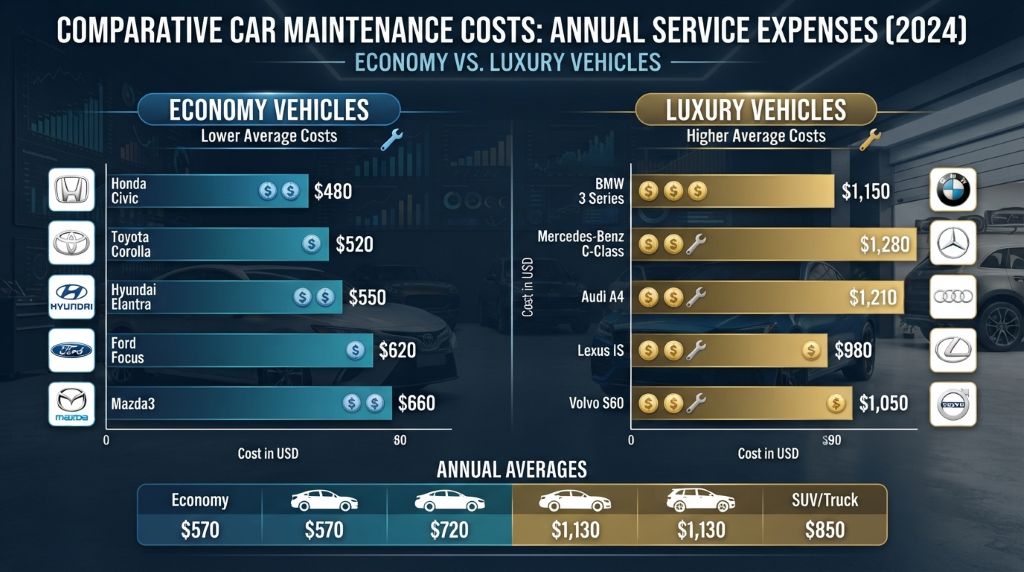
At the opposite end, luxury brands charge premium prices for every visit. The ten-year totals tell the story clearly:
- BMW: roughly $17,800 over ten years, per CarEdge
- Land Rover: roughly $18,000 to $19,000 over ten years
- Mercedes-Benz: roughly $12,000 to $13,000 over ten years
- Audi: roughly $12,000 to $13,000 over ten years
RepairPal’s annual averages agree. BMW owners spend about $968 per year, while Land Rover owners average around $1,174. That is roughly double the cost of keeping a Toyota.
Why do these brands cost so much? Three reasons repeat across every model. First, imported parts carry high prices and occasional shipping delays. Second, specialized labor narrows your shop options, which removes competitive pricing. Third, complex features create more failure points. Air suspension, adaptive dampers, and electronics-filled cabins all eventually need expensive attention.
This is exactly how Jake’s bargain BMW became expensive. The purchase price reflected the market’s fear of those repair bills. He skipped that lesson, therefore, he paid the tuition personally.
However, not every European car is a money pit. Some models, like certain Porsche and Volvo vehicles, land in the middle of the pack. Therefore, always research the specific model, not just the brand.
Car Maintenance Costs by Model: Popular Examples
Brand reputation only sets the stage. Therefore, comparing specific models reveals the real spread. Here is what widely cited CarEdge estimates show for ten-year maintenance:
- Tesla Model 3: about $3,600 total
- Toyota Camry: about $3,900 total
- Toyota Corolla: about $4,100 total
- Honda Civic: about $5,200 total
- Honda Accord: about $5,600 total
- Lexus ES: about $5,500 total
- Ford F-150: about $10,000 total
- Mercedes-Benz C-Class: about $10,000 to $12,000 total
- BMW 3 Series: about $17,000 to $18,000 total
Notice the pattern inside each brand. Toyota’s small cars cost less than its trucks, because trucks carry heavier duty components. Similarly, Honda’s Civic undercuts the larger Accord. Meanwhile, Lexus proves the exception worth noting. It delivers Toyota engineering with luxury comfort, and it maintains near-Toyota prices. That combination explains its loyal following.
Trucks deserve their own mention. Full-size pickups cost more to maintain than sedans, because their brakes, suspension, and transmissions handle serious loads. Therefore, a truck buyer should budget accordingly rather than fear the number.
The gap between the cheapest and priciest models exceeds $14,000 over ten years. As a result, the model on your driveway decides thousands of your future dollars before your first service visit. Choose with the decade in mind, not just the test drive.
What Drives the Price: Parts, Labor, and Age
Three specific forces explain almost every maintenance invoice you will ever receive. Understanding them helps you predict and control costs.
Parts first. OEM parts cost more than quality aftermarket equivalents, sometimes by 50 percent or more. A Corolla brake pad set might cost $60. A BMW equivalent might cost $150. Additionally, some luxury parts are dealer-only, which removes your cheaper option entirely.
Labor second. Labor cost depends on the job’s difficulty, not just the hour rate. Replacing spark plugs on an easy four-cylinder takes under an hour. On some V6s and V8s, the same job takes three hours. Therefore, the same service can triple in price between models.
Age is the quiet multiplier. Costs follow a curve, not a straight line. My sedan proved this perfectly. Its first five years cost $2,800 in maintenance. The final five years cost $9,300, including a $1,900 timing belt job. Therefore, cars are cheapest when young and most expensive when old.
The practical lesson is powerful. Match the car to your budget’s future, not just its present. A five-year-old luxury car may cost the same to buy as a five-year-old Toyota. However, the next five years will not cost the same. Additionally, check parts prices online before buying any car. Ten minutes of research predicts years of invoices.
How to Budget and Lower Your Maintenance Costs
You cannot control parts prices entirely, however, you can control most of your bill. These strategies reliably cut costs:
- Start a $50 monthly repair fund from the day you buy the car.
- Follow the maintenance schedule, because small services prevent big failures.
- Build a relationship with a trusted independent shop instead of defaulting to the dealer.
- Use quality aftermarket parts on mainstream cars.
- Bundle services, such as pairing rotations and inspections with oil changes.
- Learn simple DIY tasks, like filters, wipers, and battery swaps.
- Compare quotes on any repair above $500.
- Research parts costs before buying your next car.
The maintenance schedule deserves the strongest emphasis. Every mechanic repeats this advice because it works. A $300 transmission fluid service prevents a $3,000 rebuild. Fresh coolant protects a $900 water pump. Therefore, spending small on schedule is the cheapest way to spend less overall.
Independent shops deserve equal credit. For mainstream brands, quality independents charge 30 to 50 percent less than dealers for identical work. Additionally, they will use your preferred parts. Luxury cars are trickier, however, many specialists now service BMWs and Mercedes at fair rates.
Finally, budget honestly. A mainstream car needs roughly $100 monthly all-in. A luxury or European car needs $150 to $200 monthly. Jake’s mistake was budgeting like a Corolla owner while driving a BMW. Therefore, budget for the car you actually own, and the surprises mostly disappear.
Final Thoughts
Car maintenance costs by model vary more than purchase prices do. Toyota and Honda keep decade totals near $4,000 to $5,600. Meanwhile, BMW and Land Rover cross $17,000. Electric models cut routine costs in half, and trucks sit in the middle. As a result, the model you choose writes your future repair budget before you drive a single mile. If unexpected repair bills become difficult to manage, exploring auto repair financing options for high mileage cars can help you understand potential ways to spread the cost.
Jake’s BMW taught him that bargains hide their true costs in service intervals. My sedan proved the opposite. Therefore, research ten-year maintenance figures before your next purchase, and budget $100 to $200 monthly for whatever you drive.
Have you been surprised by one model’s cheap upkeep or another’s expensive habits? Share your numbers in the comments below. Additionally, share this guide with a friend comparing cars right now, because the cheapest car to buy is rarely the cheapest car to own.
Frequently Asked Questions
Which car brand has the lowest maintenance costs?
Tesla, Toyota, Honda, and Mazda consistently rank lowest. Toyota averages about $441 per year, per RepairPal.
How much should I budget for car maintenance yearly?
Plan on $400 to $600 yearly for mainstream brands. Budget $900 to $1,200 for luxury brands.
Are all European cars expensive to maintain?
Mostly, yes. BMW, Mercedes, and Audi cost roughly double mainstream brands. However, individual models vary.
Do electric cars really cost less to maintain?
Yes. Consumer Reports found EV owners spend about half as much on maintenance and repairs.
Does a warranty eliminate maintenance costs?
No. Warranties cover failures, not routine service. Oil changes, tires, and brakes remain your responsibility.