How to Start DIY Electrical Work with the Right Tools at Home
Taking on electrical projects at home can feel intimidating at first. The wires, the breakers, the safety rules — it is a lot to take in. However, with the right preparation and the right tools, many basic electrical tasks are well within reach for a motivated beginner.
This guide will walk you through everything you need to know to get started safely. You will learn which tools are essential, how to use them correctly, and what safety practices to follow every single time. Whether you want to replace a light switch, install a ceiling fan, or fix a faulty outlet, this article gives you a solid foundation to work from.
Why More Homeowners Are Taking on Electrical Projects
The cost of hiring an electrician has risen steadily over the years. Simple jobs that once seemed minor can now come with hefty labor charges. As a result, more homeowners are choosing to handle basic tasks themselves.
Additionally, the rise of online tutorials and instructional videos has made it easier than ever to learn new skills. A project that once required a professional can now be tackled on a weekend afternoon — provided you have the right knowledge and tools.
That said, not every electrical job is a DIY project. Work involving your main electrical panel, new wiring through walls, or anything requiring a permit should always go to a licensed professional. The focus here is on safe, manageable tasks that any careful beginner can learn to do.
Understanding the Basics Before You Touch Anything
Before you pick up a single tool, you need to understand a few fundamental concepts. Electricity is invisible, fast, and unforgiving. Respecting it is not optional.
The most important habit to build is this: always turn off the circuit breaker before working on any outlet, switch, or fixture. Do not assume the power is off just because a switch is in the off position. Always verify with a voltage tester.
Additionally, learn to read your home’s circuit breaker panel. Each breaker controls a specific area of your home. Labeling the panel properly helps you isolate the right circuit quickly and safely.
Ground fault circuit interrupters, commonly called GFCIs, are another concept to understand early. These are the outlets with the small reset and test buttons, usually found in bathrooms and kitchens. They protect against electric shock near water. Knowing how they work and how to reset them is basic but valuable knowledge.
Building Your First Home DIY Electrical Tools Collection
You do not need a truck full of equipment to get started. A focused, well-chosen set of tools will handle the majority of beginner tasks. Investing in quality tools from the beginning saves money in the long run and makes every job safer and easier.
Here is what your starter collection should include.
A Non-Contact Voltage Tester
This is the single most important tool you will own. A non-contact voltage tester detects electrical current without touching any wires directly. You simply hold it near a wire, outlet, or switch, and it beeps or lights up if electricity is present.
Never skip this step. Even when you believe a circuit is off, always test before touching anything. This one habit can prevent serious injury.
Look for a model with both audible and visual alerts. Some also have a built-in flashlight, which is useful when working in dim electrical boxes.
A Multimeter
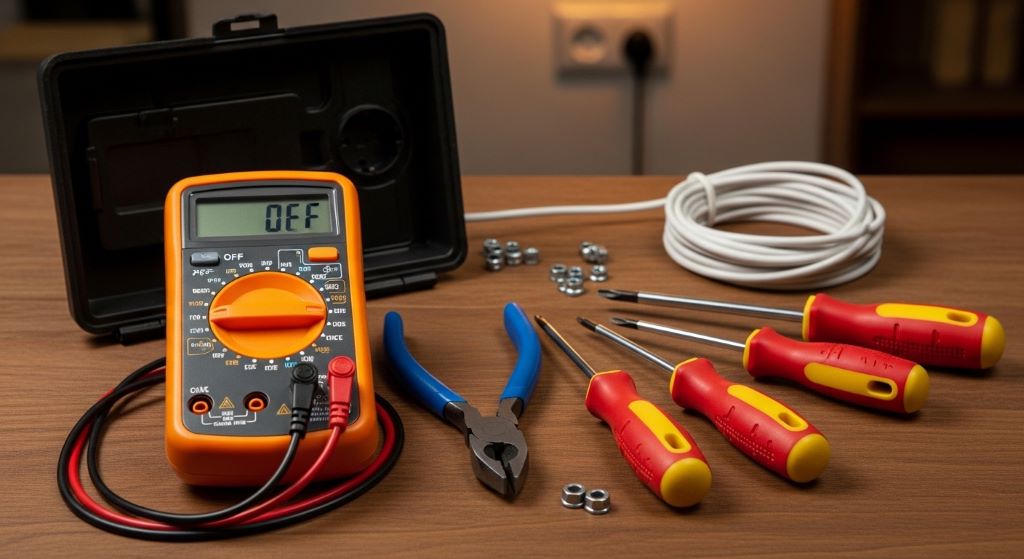
A multimeter measures voltage, current, and resistance. It is one of the most versatile tools in any home DIY electrical tools collection. Beginners often overlook it, but it becomes essential the moment you need to diagnose a problem beyond a simple on-off issue.
Digital multimeters are easier to read than analog ones. Choose a model with auto-ranging capability, which means it selects the correct measurement range automatically. This removes one layer of confusion for new users.
You will use a multimeter to confirm voltage levels, test outlets, check continuity in wires, and more. It is worth spending a little extra on a reliable model.
Insulated Screwdrivers
Electrical work involves a lot of screws — on outlets, switches, junction boxes, and panels. You need screwdrivers with insulated handles rated for electrical use.
A basic set should include both flathead and Phillips head varieties in multiple sizes. Look for handles rated to at least 1,000 volts. This rating means the handle is tested to resist electrical current, giving you an important layer of protection.
Avoid using general-purpose screwdrivers from your garage toolbox for electrical tasks. The handles may look similar, but they are not built to the same safety standard.
Needle-Nose Pliers
Needle-nose pliers are essential for bending wire ends into loops, grabbing small components in tight spaces, and holding wires steady while you work. Like screwdrivers, they should have insulated handles rated for electrical work.
These pliers are especially useful when connecting wires to screw terminals on outlets and switches. The looped end wraps neatly around the screw, creating a secure and safe connection.
Wire Strippers
Wire strippers remove the plastic insulation from the end of a wire without damaging the metal conductor inside. This is a task you will perform constantly in electrical work.
A good wire stripper has clearly marked gauges for different wire sizes. The most common residential wire sizes are 12 AWG and 14 AWG. Make sure your stripper handles both. Some models also include a built-in wire cutter and crimper, which adds useful versatility.
A Cordless Drill and Bits
Many electrical tasks require drilling holes in walls, studs, or junction boxes. A cordless drill with a set of bits suited for wood and metal is a practical addition to your kit.
You do not need the most powerful drill on the market. A mid-range model with a good battery life will handle most residential tasks with ease. Additionally, a right-angle drill attachment can be helpful when working in tight spaces like wall cavities.
Fish Tape or Wire Fishing Rods
Running wire through walls and ceilings is one of the trickier aspects of electrical work. Fish tape is a flexible, retractable steel tape that you thread through walls to pull wire from one point to another.
For beginners, glow-in-the-dark wire fishing rods are often easier to use. They come in connected sections that you push through the wall cavity. Once through, you attach the wire and pull it back.
This tool is not needed for every project. However, if you plan to add outlets or run new wire anywhere, it becomes indispensable.
A Headlamp or Work Light
Good lighting is not a luxury in electrical work — it is a necessity. Electrical boxes are often in dark corners, tight spaces, or dimly lit rooms. A hands-free headlamp keeps both hands free while ensuring you can see exactly what you are doing.
A portable LED work light is also worth having for larger tasks. Bright, shadow-free lighting reduces mistakes and makes the work faster.
Choosing a Beginner Electrician Kit vs. Buying Individual Tools
When you are just starting out, you face a common question: should you buy a pre-packaged kit or build your own collection piece by piece?
A beginner electrician kit has real advantages. These kits bundle essential tools together at a lower combined price. They are convenient, and many come in a carrying case that keeps everything organized. For someone just getting started, a kit removes the guesswork about what to buy.
However, pre-packaged kits vary widely in quality. Some include tools with insulation ratings that meet safety standards, while others do not. Always check the specifications before buying. Look for tools rated to IEC 60900 or ASTM F1505 standards, as these indicate proper insulation testing for electrical use.
On the other hand, buying tools individually lets you choose quality at each step. You can invest more in a reliable multimeter while saving on items where brand matters less. This approach costs more upfront but often results in a better overall kit.
The best approach for most beginners is a middle ground. Start with a reputable pre-assembled kit that meets safety standards, then add specialty tools as you take on more complex projects.
Safe Work Habits That Every Beginner Must Follow
Having great tools means nothing without safe habits. Therefore, take these practices seriously before you start any project.
Always turn off the breaker for the circuit you are working on. Then use your non-contact voltage tester to confirm the power is off before touching any wires.
Work with one hand when possible. This old electrician’s habit reduces the risk of current passing through your chest if you accidentally contact a live wire. Keep your other hand in your pocket or behind your back.
Never work alone on electrical tasks. Have someone nearby who can call for help if something goes wrong. This is especially important when you are new to the work.
Keep your work area dry. Water and electricity are a dangerous combination. Never work on electrical systems in wet conditions or with wet hands.
Additionally, use electrical tape to cover any exposed wire ends while you work. This prevents accidental contact if the power is somehow restored unexpectedly.
Finally, take your time. Rushing is one of the leading causes of mistakes in DIY electrical work. If you feel unsure at any point, stop, research the answer, and then continue.
Common Beginner Projects You Can Tackle Safely
Once you have your tools and safety habits in place, several projects are well within reach.
Replacing a standard light switch is one of the best first projects. It involves only a few wires and clear, consistent connections. The same applies to replacing an old electrical outlet. Both tasks take less than an hour and build real confidence.
Installing a ceiling fan in place of an existing light fixture is another manageable project. The wiring is similar, though you may need to replace the ceiling box with one rated for fan weight. Always check the box rating before hanging a fan.
Resetting or replacing a GFCI outlet is another practical skill. These outlets protect areas near water and occasionally trip or wear out. Replacing one involves the same basic wiring skills as a standard outlet.
When to Stop and Call a Professional
Knowing your limits is just as important as knowing your tools. Some jobs are not appropriate for beginners, no matter how well-equipped they are.
If you open an electrical box and find scorched wires, melted insulation, or a burnt smell, stop immediately. These are signs of a serious problem that needs professional attention. Similarly, if your circuit breaker trips repeatedly, the issue likely goes beyond a simple fix.
Any project involving your main electrical panel is off-limits for DIY. This includes adding new circuits, replacing breakers, or upgrading the panel itself. These tasks require permits and professional expertise in most regions.
Therefore, use your skills for maintenance and simple replacements. Leave the complex work to the licensed professionals who are trained and insured to handle it.
Conclusion
Starting DIY electrical work at home is a rewarding skill to develop. It saves money, builds confidence, and gives you a deeper understanding of how your home works. However, it must be approached with care, patience, and the right tools.
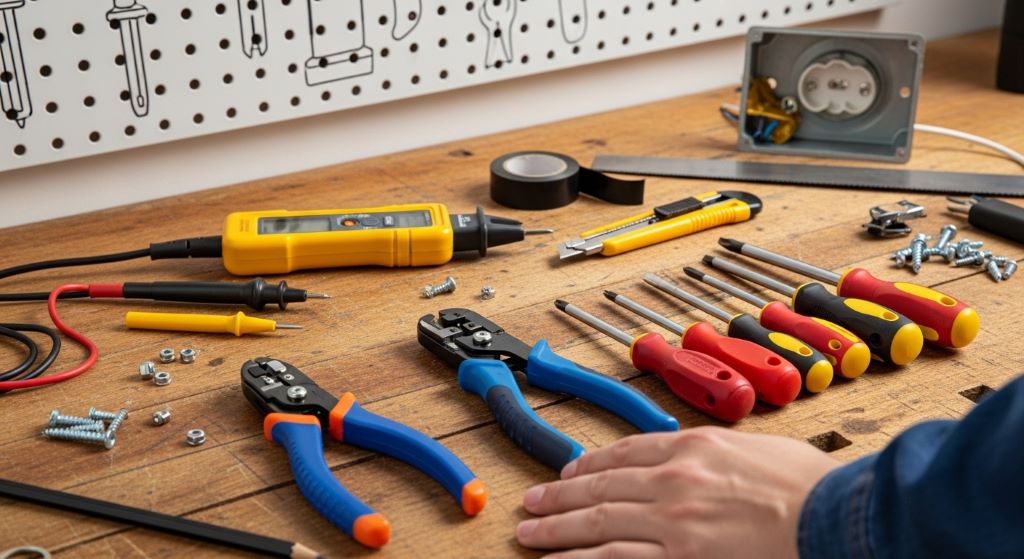
Begin by understanding basic electrical safety principles. Then, build a reliable collection of home DIY electrical tools, including a voltage tester, multimeter, insulated screwdrivers, needle-nose pliers, and wire strippers. Whether you choose a beginner electrician kit or build your set gradually, prioritize quality and safety ratings above all else.
Stick to simple, well-defined projects at first. Master each one before moving to the next. And always know when a job is beyond your skill level. With the right mindset and the right equipment, you can handle many common electrical tasks confidently and safely.
Frequently Asked Questions
What is the most important tool for a beginner doing electrical work at home?
A non-contact voltage tester is the most essential tool. It lets you confirm whether a circuit is live before you touch any wires, which is the single most important safety step in any electrical task.
Is a beginner electrician kit good enough for home projects?
Yes, a quality beginner electrician kit is suitable for most basic home electrical tasks. Make sure the tools in the kit meet recognized insulation safety standards, such as IEC 60900 or ASTM F1505, before using them.
Can a beginner replace an electrical outlet safely?
Yes. Replacing a standard outlet is one of the most beginner-friendly electrical tasks. As long as you turn off the circuit, verify the power is off with a tester, and follow the correct wiring connections, it is a manageable project.
Do I need a permit for DIY electrical work at home?
It depends on your local regulations and the scope of the work. Simple repairs and replacements often do not require permits. However, new wiring, panel work, or adding circuits typically does. Always check with your local authority before starting.
How do I know which wire gauge I am working with?
Wire gauge is usually printed on the outer sheathing of the cable. In most homes, 14 AWG wire is used on 15-amp circuits and 12 AWG on 20-amp circuits. Your wire stripper will also have gauge markings that can help you identify the size when the label is not visible.
Related Topics:
How Much Fuel Does a Semi Truck Really Hold? A Closer Look at Gas Tanks on the Highway
Williams Socket Sets: The Unsung Heroes of Your Auto Repair Arsenal