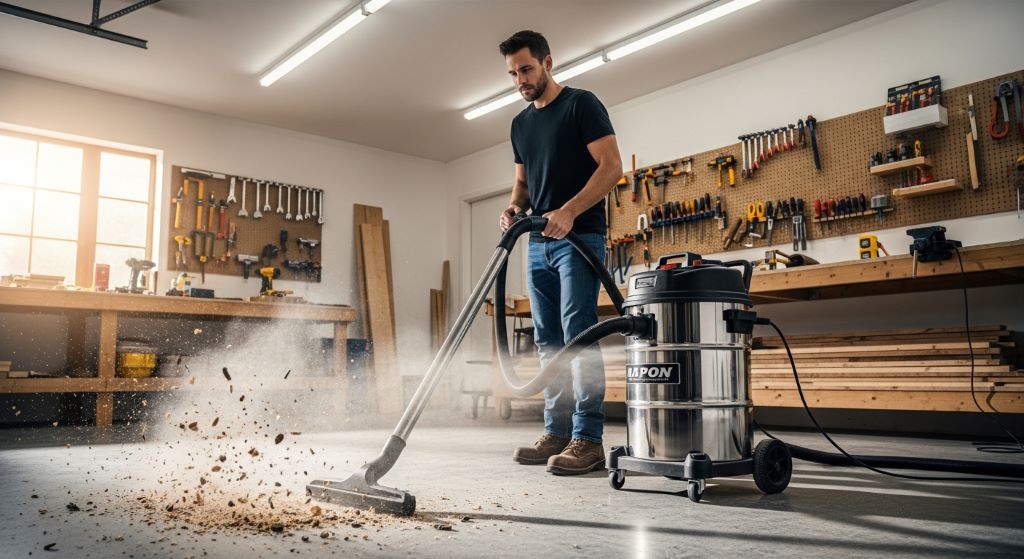
Your garage takes a beating. Oil stains, sawdust, gravel, pet hair, and workshop debris all pile up fast. A regular household vacuum simply cannot handle that kind of mess. That is where a dedicated garage vacuum comes in.
However, walking into a store or browsing online without any plan can leave you overwhelmed. Prices vary widely. Features differ from model to model. And the wrong choice means spending money on something that sits unused.
This buying guide will walk you through everything you need to know. By the end, you will feel confident making a smart, informed decision.
Why a Garage Vacuum Is Worth the Investment
Most people underestimate how different garage cleaning is from home cleaning. Garages collect heavy debris like nails, screws, and chunks of drywall. They also deal with fine particles like sawdust and cement dust that can destroy a standard vacuum motor quickly.
A purpose-built garage vacuum is designed for these conditions. It uses stronger motors, tougher filters, and larger collection tanks. Therefore, it lasts longer and works better in tough environments.
Additionally, a clean garage is a safer garage. Dust on the floor creates slip hazards. Sawdust near power tools is a fire risk. Investing in the right vacuum is also an investment in your safety.
How to Read a Garage Vacuum Buying Guide the Right Way
A buying guide is only useful if you know how to use it. Many people skim through spec lists without understanding what the numbers mean. That leads to poor choices.
The key is to focus on specs that actually affect real-world performance. Ignore the marketing language and look at the data. The most important areas to examine are motor power, tank size, filter quality, hose length, and accessories included.
Each of these factors tells you something specific about how the vacuum will perform in your garage. The sections below break each one down clearly.
Understanding Motor Power and What It Means for You
Motor power is often measured in horsepower (HP) or amps. For garage use, a motor between 3.5 HP and 6.5 HP is generally the right range. Anything below that may struggle with heavy debris. Anything above that may be more than most home garages need.
However, raw numbers alone do not tell the full story. The design of the intake, the hose diameter, and the filter all affect how well the motor translates power into actual cleaning. That is why suction power tips from experienced users and professional reviewers often emphasize real-world tests over spec sheet numbers.
When reading a buying guide, look for reviews that test the vacuum on multiple surfaces. A strong motor that chokes on fine dust is not a good fit for a woodworking shop. A vacuum with moderate power but excellent filtration may outperform it in practice.
Tank Size: Matching Capacity to Your Cleaning Habits
Tank size matters more than most buyers realize. A small tank means frequent trips to empty it, which slows down your work. A tank that is too large becomes heavy and difficult to move around.
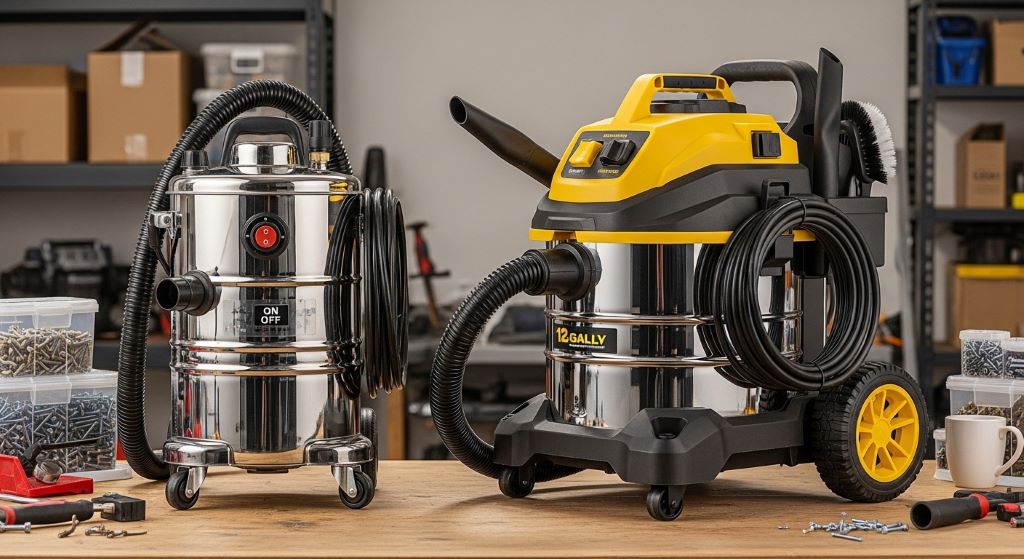
For occasional cleaning in a small garage, a 5- to 10-gallon tank is usually enough. For regular use in a larger workspace, look for something in the 12- to 16-gallon range. Workshops that generate heavy debris daily may benefit from even larger tanks.
Additionally, consider whether the tank has a drain plug. Some models allow you to empty liquid directly without removing the tank, which saves a lot of time when cleaning up spills.
Vacuum Features That Separate Good Models from Great Ones
Not all vacuums are built the same. Some come loaded with extras that make a genuine difference. Others add features just to justify a higher price. Knowing the difference helps you spend wisely.
Here are the vacuum features worth paying attention to:
- Wet and dry capability: This lets you vacuum liquids as well as solids. It is essential for garages where spills happen.
- Blower function: Some models can reverse airflow, turning the vacuum into a blower. This is useful for clearing debris from tight corners or outdoor areas.
- Filter type: HEPA filters capture fine particles that standard filters miss. This matters greatly if you cut wood, grind metal, or work with drywall compound.
- Automatic filter cleaning: Some models shake the filter clean automatically during use. This keeps suction consistent without manual intervention.
- Cord length: A longer cord means more range without needing an extension. Look for at least 20 feet for a standard two-car garage.
These vacuum features are worth comparing across models before you make a final decision. They determine how useful and convenient the vacuum will be over time.
Hose and Accessory Quality: Often Overlooked, Always Important
A vacuum is only as good as the accessories that come with it. The hose, in particular, deserves close attention. A short, stiff hose limits your reach and makes cleaning awkward. A long, flexible hose makes the job much easier.
Look for a hose that is at least 7 feet long. Crush-resistant hoses are worth the upgrade since garage hoses tend to get stepped on, rolled over, or kinked regularly.
Accessories to look for include a wide-mouth nozzle for large debris, a crevice tool for tight spaces, and a brush attachment for delicate surfaces. Some models include a car cleaning kit, which adds extra value if you also detail vehicles in your garage.
Additionally, check whether the accessories lock into place securely. Loose attachments that pop off mid-use are a common complaint in user reviews, and they are a genuine frustration.
Corded vs. Cordless: Which One Fits Your Garage?
Cordless garage vacuums have improved significantly in recent years. They offer freedom of movement and are easier to store. However, they still have limitations.
Battery-powered models typically run for 20 to 40 minutes on a single charge. That is fine for quick cleanups but may not be enough for a thorough deep clean. Additionally, battery performance tends to drop in cold weather, which matters if your garage is unheated.
Corded models, on the other hand, deliver consistent power for as long as you need. They are heavier and less convenient, but they never run out of charge. For most garage users who do longer cleaning sessions, corded models remain the better choice.
Therefore, if you need maximum convenience for short tasks, go cordless. If you need reliability and sustained power, go corded.
Noise Level: A Factor Worth Checking
Garage vacuums are loud. That is not surprising given their powerful motors. However, some models are significantly louder than others, and that matters if you work in a shared space or have neighbors nearby.
Noise levels are measured in decibels (dB). Most garage vacuums fall between 70 dB and 90 dB. At 90 dB, extended exposure can strain your hearing without ear protection. Look for models in the lower end of that range if noise is a concern.
Some manufacturers now offer quieter designs with insulated motor housings. They cost a bit more, but the reduced noise is worth it for many users.
Suction Power Tips From Real Garage Users
Reading specs is helpful, but hearing from people who actually use these vacuums is even better. Experienced garage owners and workshop users consistently share the same suction power tips:
- Always match the vacuum to your primary task. A shop vacuum rated for sawdust needs a fine-dust filter, not just a standard one.
- Clean or replace the filter regularly. A clogged filter cuts suction dramatically, no matter how powerful the motor is.
- Use the shortest hose and the widest attachment possible for your task. Every extra foot of hose and every narrow connector reduces suction slightly.
- Do not overfill the tank. Once the tank is more than two-thirds full, suction starts to drop noticeably.
These practical suction power tips make a bigger difference in day-to-day use than any spec sheet comparison.
Price Ranges and What to Expect at Each Level
Garage vacuums span a wide range of price points. Here is a rough breakdown of what to expect:
Under $60: Basic wet/dry models with limited accessories and smaller tanks. Fine for light, occasional use.
$60 to $150: Mid-range models with better motors, larger tanks, and more accessories. This is the sweet spot for most home garage users.
$150 to $300: High-performance models with HEPA filtration, automatic filter cleaning, and premium build quality. Ideal for active workshops.
Over $300: Professional-grade vacuums built for daily heavy-duty use. Rarely necessary for personal garages but worth considering for trade professionals.
Set a realistic budget before you start browsing. Knowing your range makes the decision much easier.
Conclusion
Choosing the right garage vacuum does not need to be complicated. Start by thinking about how you use your garage. Consider the type of debris you deal with most, the size of the space, and how often you clean.
From there, focus on the factors that matter: motor power, tank size, filter quality, hose length, and accessories. Pay attention to whether you need wet/dry capability and decide between corded and cordless based on your needs.
Use a buying guide as a starting point, not a final answer. Read real user reviews, compare a few top models, and do not let marketing claims distract you from practical performance. A well-chosen garage vacuum will make cleaning faster, easier, and more effective for years to come.
Frequently Asked Questions
What size garage vacuum do I need for a standard two-car garage?
A 12- to 16-gallon tank with a motor between 4.5 and 6.5 HP works well for most two-car garages. Pair it with a hose of at least 7 feet for comfortable reach.
Is a wet/dry vacuum necessary for a garage?
In most cases, yes. Garages regularly see liquid spills from cars, rain tracked in, and cleaning water. A wet/dry vacuum handles both without needing a second machine.
How often should I replace or clean the filter?
For regular use, inspect the filter every month. Clean it after each heavy session involving fine dust like sawdust or drywall. Replace it every six to twelve months depending on how hard you use the vacuum.
Can I use a garage vacuum to clean my car interior?
Yes, many garage vacuums come with car detailing attachments. Look for models that include a crevice tool and a soft brush nozzle for interior surfaces.
Are cordless garage vacuums as powerful as corded ones?
Not yet, in most cases. Cordless models are improving, but corded vacuums still deliver more consistent and sustained suction. For long cleaning sessions or heavy debris, corded remains the better choice.
Related Topics:
How to Wash Car with Water Using Safe Rinsing Techniques
Why Rotate Car Tires: A Journey to Safer, Smoother Rides