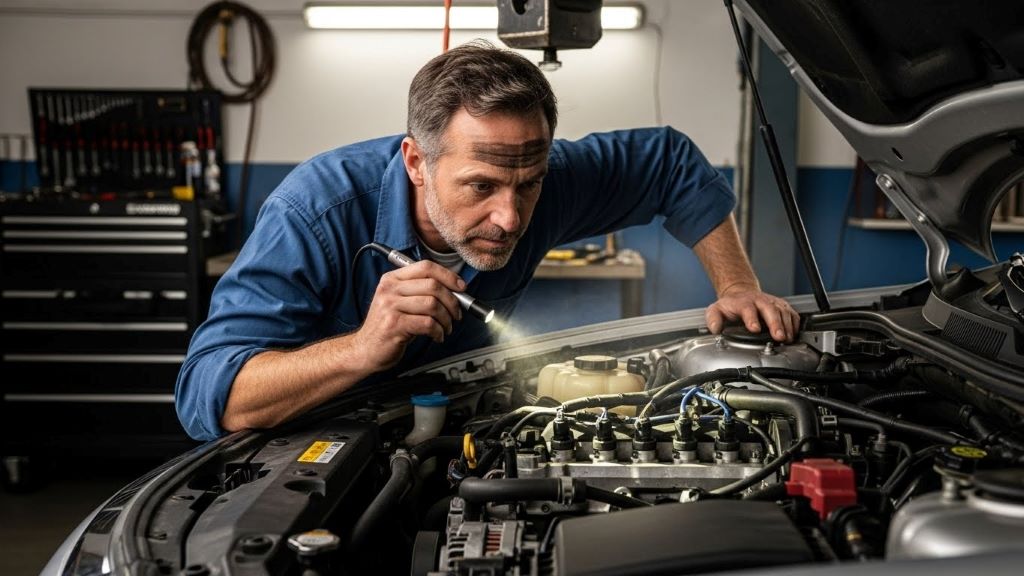
You climb into your car and immediately notice that familiar, unsettling smell of gasoline. You take it to your trusted mechanic, expecting them to find the problem quickly. However, after a thorough inspection, they tell you there’s no visible leak. This frustrating scenario leaves many drivers confused and concerned about their vehicle’s safety.
Understanding why your car smells like gas when there’s no apparent leak requires knowledge of your vehicle’s fuel system and the various factors that can cause phantom gasoline odors. This guide will help you identify potential causes and solutions for this perplexing problem.
Understanding the Gasoline Smell Problem
A gasoline smell in your vehicle is never something to ignore. Even when a mechanic cannot locate a visible leak, the odor indicates that fuel vapors are escaping somewhere in your car’s system. Additionally, these vapors can pose health risks and potentially create fire hazards if left unaddressed.
The challenge with gasoline smells is that they don’t always originate from obvious leaks. Sometimes, the issue stems from faulty components, worn seals, or vapor system problems that don’t leave visible evidence. Therefore, identifying the source requires systematic investigation beyond a simple visual inspection.
Common Hidden Causes of Gasoline Odors
Faulty Fuel Pressure Regulator
Your car’s fuel pressure regulator controls the amount of fuel flowing to the engine. When this component fails, it can allow excess fuel into the combustion chamber or cause fuel to leak into the vacuum line. However, this type of problem rarely creates visible puddles under your vehicle.
A malfunctioning pressure regulator often causes a strong gas smell inside the cabin, especially when the engine is running. The excess fuel burns incompletely, creating vapors that enter through the ventilation system. Additionally, you might notice decreased fuel efficiency or rough idling alongside the smell.
Evaporative Emission Control System Issues
Modern vehicles use an Evaporative Emission Control (EVAP) system to capture and recycle fuel vapors. This system includes components like the charcoal canister, purge valve, and various hoses and seals. When any part of this system fails, fuel vapors escape into the atmosphere instead of being burned in the engine.
The tricky part about EVAP system problems is that they rarely cause visible leaks. Instead, they allow gasoline vapors to escape gradually. Therefore, your mechanic might not see any liquid fuel during a standard inspection. According to automotive experts at Consumer Reports, EVAP system issues are among the most common causes of mysterious gasoline odors in vehicles.
Damaged or Loose Gas Cap
Sometimes, the simplest explanation is the correct one. A damaged, loose, or improperly sealed gas cap can allow fuel vapors to escape from your tank. This issue becomes more noticeable after refueling or on hot days when vapors expand.
Many drivers overlook this possibility because it seems too simple. However, a faulty gas cap can trigger your check engine light and create persistent gasoline smells. Furthermore, replacing a gas cap costs significantly less than other fuel system repairs, making it a logical first step in troubleshooting.
Fuel Injector O-Ring Deterioration
Fuel injectors use small rubber O-rings to create tight seals where they connect to the fuel rail and intake manifold. Over time, these O-rings deteriorate due to heat, age, and exposure to gasoline. When they fail, tiny amounts of fuel can seep out.
These micro-leaks rarely create visible puddles or drips. Instead, the small amount of fuel evaporates quickly on the hot engine, creating a strong smell that’s difficult to trace. Additionally, the location of fuel injectors deep within the engine bay makes visual inspection challenging without disassembly.
Saturated Charcoal Canister
The charcoal canister in your EVAP system absorbs fuel vapors from the tank. Over time, this canister can become saturated, especially if you frequently top off your tank after the pump automatically shuts off. A saturated canister cannot absorb more vapors, allowing them to escape.
This problem often manifests as a gas smell that appears intermittently, particularly after refueling or during hot weather. However, the canister itself rarely shows visible signs of damage. Therefore, mechanics might miss this issue during standard inspections.
Why Mechanics Sometimes Miss the Problem
Intermittent Nature of Vapor Leaks
Gasoline vapor leaks often occur only under specific conditions. Temperature changes, engine heat, and fuel tank pressure all affect when and how strongly vapors escape. Consequently, if your mechanic inspects the vehicle when conditions aren’t right, they might not detect the problem.
For example, a seal that leaks when hot might appear perfectly normal during a cold morning inspection. Similarly, an EVAP system problem might only manifest after driving or when the fuel tank is nearly full. Therefore, timing plays a crucial role in diagnosis.
Limitations of Visual Inspections
Standard mechanical inspections rely heavily on visual examination and basic tools. However, vapor leaks don’t always leave visible traces. Unlike liquid fuel leaks that create puddles or stains, vapor leaks simply disappear into the air.
Furthermore, many fuel system components are hidden beneath other parts, making thorough visual inspection difficult without extensive disassembly. Mechanics must balance the cost and time of comprehensive diagnosis against the likelihood of finding the problem.
Need for Specialized Diagnostic Equipment
Accurately diagnosing elusive gasoline smells often requires specialized equipment like smoke machines or ultrasonic leak detectors. These tools can reveal vapor leaks that visual inspection misses. However, not all repair shops have this equipment readily available.
According to Popular Mechanics, smoke testing has become the gold standard for diagnosing EVAP system leaks. This process involves introducing artificial smoke into the fuel system and watching where it escapes. Nevertheless, this service may require scheduling specifically and might cost more than standard inspections.

Steps You Can Take
Perform Your Own Basic Checks
Before returning to the mechanic, you can investigate some common causes yourself. First, ensure your gas cap is tight and undamaged. Next, check for any obvious damage to fuel lines visible under the vehicle. Additionally, note when the smell is strongest, as this information helps mechanics narrow down the problem.
You should also check whether your check engine light is illuminated. Many EVAP system problems trigger diagnostic codes that can guide repair efforts. Even if the light isn’t on, a mechanic can check for pending codes that haven’t yet triggered the warning light.
Request Specific Tests
When you return to your mechanic, request specific diagnostic procedures based on the information in this article. Ask them to perform an EVAP system smoke test or pressure test. Additionally, request inspection of fuel injector O-rings and the fuel pressure regulator.
Being specific about the tests you want shows that you’ve done your research and helps mechanics focus their diagnostic efforts. However, trust their professional judgment if they recommend different approaches based on their experience with your vehicle’s make and model.
Consider Getting a Second Opinion
If your current mechanic cannot find the problem, consider visiting a different shop. Different mechanics have different specialties and equipment. Therefore, another professional might have the tools or experience needed to identify your particular issue.
Dealership service departments often have specialized diagnostic equipment and training specific to your vehicle’s make. While they typically charge more than independent shops, their expertise might prove valuable for difficult-to-diagnose problems.
Safety Considerations
Gasoline vapors are both toxic and flammable. Even without a visible leak, breathing fuel vapors can cause headaches, dizziness, and nausea. Additionally, these vapors create a fire risk, especially in enclosed spaces like garages.
Never ignore a persistent gasoline smell, even if a mechanic cannot immediately find the source. Continue investigating until the problem is resolved. Furthermore, avoid smoking or creating sparks near your vehicle until the issue is fixed. If the smell is particularly strong, consider parking outdoors rather than in an attached garage.
Conclusion
A gasoline smell without a visible leak frustrates both drivers and mechanics. However, understanding the hidden causes of fuel odors helps you work with your mechanic to solve the problem. From faulty EVAP system components to deteriorated O-rings, many issues can create strong gas smells without obvious leaks.
Don’t accept “no leak found” as a final answer if the smell persists. Request specific diagnostic tests, provide detailed information about when the smell occurs, and consider getting a second opinion if necessary. Your persistence will eventually reveal the source of the problem and restore your peace of mind.
Remember that gasoline vapors pose real health and safety risks. Therefore, continue pursuing a solution until the smell is completely eliminated. With the right diagnostic approach and a thorough mechanic, even the most elusive fuel odors can be traced to their source and permanently resolved.
Frequently Asked Questions
Can a gas smell without a leak be dangerous?
Yes, gasoline vapors are both toxic and flammable. Breathing these vapors can cause health issues like headaches and dizziness. Additionally, the vapors create fire risks even without visible liquid fuel. Therefore, you should address the problem promptly regardless of whether a leak is visible.
How much does it cost to fix a gasoline smell issue?
Costs vary widely depending on the cause. A new gas cap costs around ten to thirty dollars, while EVAP system repairs can range from one hundred to six hundred dollars. Fuel injector O-ring replacement typically costs between one hundred fifty to four hundred dollars. Therefore, proper diagnosis is essential to avoid unnecessary repairs.
Will a check engine light always appear with fuel system problems?
Not always. Many fuel system issues trigger the check engine light, but some problems occur without activating warning lights. However, a mechanic can still check for pending diagnostic codes that haven’t yet triggered the light. These codes often provide valuable clues about the problem’s location.
Is it safe to drive a car that smells like gas?
You can drive short distances to reach a repair shop, but avoid long trips until the problem is diagnosed. Ensure good ventilation by opening windows and avoid parking in enclosed spaces. However, if the smell is overwhelming or you notice other symptoms like rough running, have the vehicle towed instead.
How can I tell if my gas cap is causing the smell?
Try tightening the gas cap until it clicks several times. If the smell disappears within a day or two, the cap was likely loose. Additionally, inspect the cap’s rubber seal for cracks or damage. If you notice any damage or if the cap is more than five years old, replace it as a precautionary measure.
Related Topics:
Why Tire Rotation Intervals Matter: Keep Your Wheels Spinning Smoothly